How to properly ventilate a basement or utility room without windows
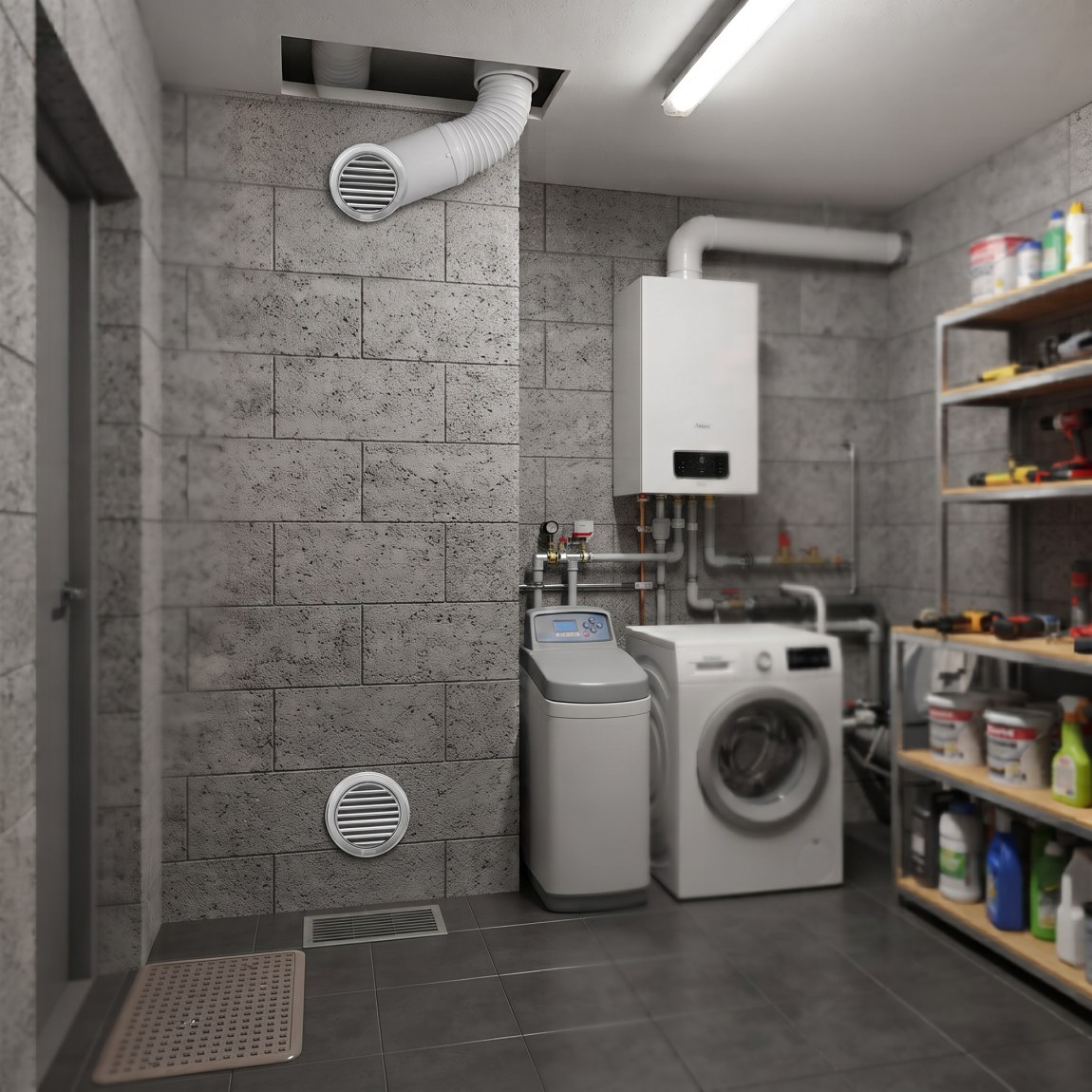
When natural ventilation is not enough...
Basements, utility rooms, boiler rooms, or laundry rooms have one thing in common – they often lack windows. Without natural daylight and the ability to open a window wide, moisture, odors, and stale air quickly accumulate in these spaces. The result is often condensing walls, a musty odor, and, in worse cases, dangerous mold.
How to effectively ventilate such spaces so that the air in the house circulates again, and what ventilation grilles or fans to choose?
1. Know the difference: Passive vs. active basement ventilation Before you start making structural changes, it is necessary to assess the room layout and the level of moisture:
Passive ventilation (natural): Works on the principle of temperature and pressure differences (the chimney effect). The basis is two openings – one for fresh air supply (low near the floor) and the other for exhaust (under the ceiling). These openings are fitted with wall ventilation grilles that prevent insects or rodents from entering. Active ventilation (forced): If passive airflow is not enough (e.g., in sealed new buildings or rooms without a connection to a roof chimney), it is necessary to use fans and duct systems.
2. Key elements for effective ventilation and fan selection If you choose forced or improved passive ventilation, you cannot do without the right components and their correct installation:
Choosing the right fan: For shorter air paths (direct extraction through the wall outside), a classic axial fan is fully sufficient, ensuring fast and efficient air extraction. If you are facing a longer duct route (e.g., extraction routed through a ceiling soffit or a more complex duct system), choose a more powerful mixed-flow (diagonal) fan, which can handle higher pressure losses in the ductwork. Ventilation grilles and ducts: Round or flat plastic channels and reliable ventilation grilles are used to connect the room with the external environment. Backdraft damper: Prevents cold air or odors from outside from returning into the room when the fan is not currently running.
3. Betting on quality: Choose ASA material and stainless steel When choosing grilles and components for damp spaces, the choice of materials plays a key role. You will mainly encounter two top-tier materials in the offer:
ASA plastic: This is a highly durable and modern polymer that is fully UV-stable. Unlike ordinary plastics, ASA grilles do not yellow, become brittle, or degrade due to sunlight or temperature changes, making them great for both exterior and interior use. Stainless steel: The ideal choice for demanding operations, industrial spaces, or modern facades. Stainless steel ventilation grilles offer maximum mechanical resistance and a long service life without compromise.
4. What to watch out for during installation?
Placement of openings: Place the supply grille as low to the floor as possible, while placing the exhaust grille or fan on the opposite wall or ceiling as high as possible. This achieves ideal air circulation. Fan capacity: Always choose the fan performance (m³/h) with regard to the volume of the room. A smaller basement cubicle will suffice with a quiet basic model, while a laundry room or drying room requires higher performance. Thermal bridges: When passing through the perimeter wall, make sure to properly insulate and seal the duct so that unwanted condensed water does not form around it.
Summary
A properly designed ventilation system will transform a damp and musty corner into a clean and healthy space without the risk of mold. Whether you choose reliable grilles made of ASA plastic, durable stainless steel, or opt for an axial or diagonal fan, quality components will ensure trouble-free and quiet operation for many years.